Author name: Javier

European Projects, News

Eureca. IWS has held several multiplier events

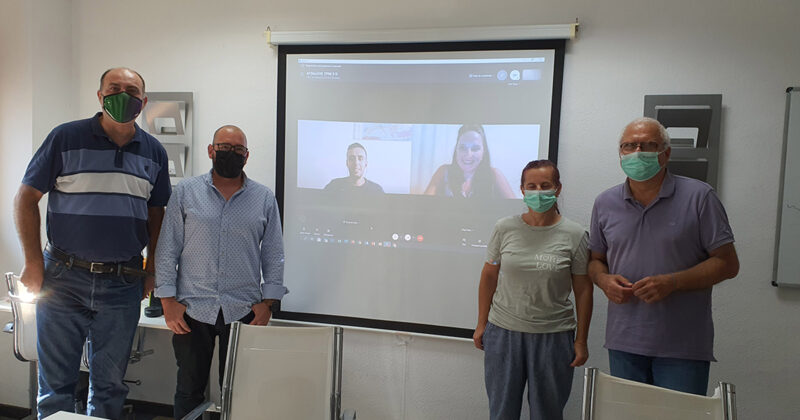
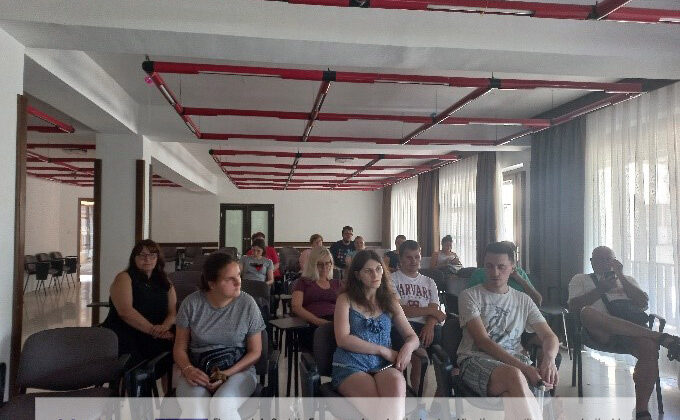
Internet Web Solutions (IWS) has successfully organized two public events to present the Eureca project, including its objectives and results, to a non-professional audience interested in urban ecology and environmental issues. The events were held in two separate sessions, bringing together a total of 79 attendees. The first session took place on July 16, 2025, and was attended by 16 people. The second session was held on November 13, 2025, and welcomed 63 participants across three different groups. Organization and Logistics From an organizational standpoint, IWS invited participants through its own social media channels and those of the Eureca project. The invaluable support and outreach from their associated partner, Arrabal, was also instrumental in promoting the events. Both sessions were hosted at Arrabal’s facilities, which provided ease of access and allowed for the broadest possible capacity.  Event Agenda The agenda for the events included the following key points: Project Results Highlighted A significant portion of the presentation was dedicated to showcasing the Best Practices in urban ecology, which the consortium partners (from Spain, Italy, Poland, the Czech Republic, and Portugal) have compiled from their respective countries. The urban ecology training courses also played a prominent role in the presentations. The comprehensive training corpus includes the following courses: All courses were presented with support from the Eureca online platform (https://www.eurecaedu.eu/), highlighting its functionality and accessibility. Furthermore, participants were introduced to the Case Studies focusing on the transnational consortium meetings in Lisbon (Portugal), Torrecuso (Italy), and Chrudim (Czech Republic). IWS representatives also presented the Newsletters prepared to date, which summarize the project’s development and key milestones. Feedback and Engagement Following the formal presentation, attendees were given the opportunity to participate in a dynamic and informal feedback session. Participants were highly engaged and expressed significant interest in the project. The key takeaways from the feedback received include:

Eureca. IWS has held several multiplier events Read Post »

European Projects

AIM Project Launches a Comprehensive AI Training Curriculum for MSMEs

Co-financed by the Erasmus+ Programme of the European Commission, the AIM Project introduces a structured, multilingual training curriculum designed to help micro, small and medium-sized enterprises (MSMEs) across Europe build the competences and confidence needed to adopt Artificial Intelligence (AI) effectively. Following the findings of the needs analysis and mapping activities carried out under Work Package 2 (WP2), the AIM Project (Artificial Intelligence for MSMEs) has developed a practical and evidence-based training curriculum under Work Package 3 (WP3). This curriculum directly responds to the real needs and challenges identified among MSME operators, providing a clear learning path for those aiming to integrate AI tools into business operations, marketing, and customer engagement. The design of the AIM Training Curriculum is grounded in the data collected during WP2, which revealed significant gaps in digital readiness, strategic understanding, and technical skills across Europe’s small business ecosystem. These insights informed the structure of a seven-module curriculum that progressively develops both AI awareness and applied competence, bridging the gap between abstract technology and daily business practice. Each module combines introductory theory with hands-on applications, case studies, and tool demonstrations. Together, they offer MSME managers, entrepreneurs, and VET professionals a coherent and accessible route to digital transformation: Each module has been carefully designed in alignment with the EntreComp (Entrepreneurship Competence Framework) and DigComp (Digital Competence Framework) of the European Commission.This alignment ensures that learning outcomes correspond to recognised European standards, strengthening participants’ knowledge, skills, and attitudes in both entrepreneurship and digital transformation. Through this competence-based approach, learners develop the ability to: This dual-framework design ensures the curriculum not only builds technical ability but also cultivates entrepreneurial mindset and digital confidence — both essential for sustainable AI adoption. All training materials will be hosted on the AIM Digital Warehouse, a free and open-access platform available in six languages. The curriculum is structured to be self-paced and easily adaptable for business training sessions or vocational education programmes. Explore more about the AIM Project and its training resources at:👉 www.aimproject.eu

AIM Project Launches a Comprehensive AI Training Curriculum for MSMEs Read Post »

European Projects, News

Spanish Team’s Workshop: The Rural Connector Challenge

During the recent Upskilling Rural consortium study visit to Kusadasi, the Spanish team presented its workshop, “The Rural Connector Challenge.”A collaborative game in which participants had to create a business project based on linking five random images.The main peculiarity was that two of these images were created and assigned by the rival team, who had to make them challenging to identify.

Spanish Team’s Workshop: The Rural Connector Challenge Read Post »

European Projects, News

NICHE 2 WP2 results are now online:

Evidence, examples and GreenComp Matrix to accelerate ICH’s green transition NICHE 2 has published the full results of Work Package 2 (WP2), now available in multiple languages on the project platform. From Iceland to Italy, France, Spain and Croatia, WP2 has turned fragmented knowledge into usable guidance for practitioners, educators and policymakers working where Intangible Cultural Heritage (ICH) meets sustainability. What’s new online 1) Executive Summary A consolidated mapping and analysis completed by each partner at country level and from an EU-wide perspective that Synthesises national findings on ICH’s role, readiness and risks in the green transition, and directly informs the co-design of the upcoming NICHE 2 Training Programme Walks readers from situational analysis to actionable insights: sector dynamics; inhibitors and challenges; support systems and best practices; and the skills/competences needed for the transition Is intended as a strategic tool for future training, policy and funding, useful beyond the project partnership. 2) Best Practices Collection (12 cases) A curated portfolio that covers five partner countries and EU-level initiatives, reflecting diverse actors, themes and territorial scales. It showcases a breadth of dimensions relevant to ICH and sustainability, including: ICH preservation & transmission Green management models for community museums and venues Policy frameworks and funding conditionalities Smart governance & technological innovation for low-impact tourism Training programmes Sustainable tourism Circular approaches / eco-design 3) The GreenComp Matrix An operational matrix developed by partners to link the training needs emerging from the mapping with the competences of the European Commission’s GreenComp framework. The matrix is used to derive clear learning outcomes for the forthcoming NICHE 2 training offer and to ensure methodological robustness and traceability from evidence to curriculum. What happens next WP2 outputs feed directly into the design of the NICHE 2 Training Programme (WP3), combining technical modules with reflection-based learning and culturally sensitive dialogue so practitioners can safeguard heritage and steward environmental change responsibly. For more information, visit the NICHE project’s official website at https://www.nicheproject.eu/index.php or contact our team via email at nicheproject.eu@gmail.com

NICHE 2 WP2 results are now online: Read Post »

European Projects, News

Upskilling Rural. Business Model Canvas Workshops!

Young people and staff spent an inspiring week in Kusadasi in Turkey between 29.08-05.09.2025 diving into the essentials of the Business Model Canvas and, among others, learning how to build a solid foundation for their ideas in rural tourism. They explored every key element of a business model: Working in dynamic teams, they analysed market needs, brainstormed creative solutions, and transformed early concepts into clear business models. By the end of the workshop, they presented fresh ideas – from innovative agritourism services to “farm-to-table” products that combine sustainability and entrepreneurship. #BusinessModelCanvas #Workshops #RuralTourism #Innovation #FarmToTable #StudentLife

Upskilling Rural. Business Model Canvas Workshops! Read Post »

European Projects

AIM Project Launches the AI Digital Repository: 50+ Ready-to-Use Artificial Intelligence Tools for MSMEs

Co-financed by the Erasmus+ Programme of the European Commission, the AIM Project unveils a comprehensive Digital Repository of AI tools, created under Work Package 2 (WP2) to enhance the digital readiness of Europe’s micro, small and medium-sized enterprises (MSMEs). As part of its mission to empower Europe’s MSMEs in their digital transformation, the AIM Project (Artificial Intelligence for MSMEs) has developed an extensive Digital Repository of Artificial Intelligence Tools — a practical, open-access resource designed to make AI adoption easier, more transparent, and more effective for small businesses. Accessible online via the AIM Digital Warehouse (www.aimproject.eu/repository.php), this repository offers a curated selection of over 50 AI tools, each carefully analysed and categorised to respond to the operational needs of MSMEs and vocational education and training (VET) professionals. The repository builds directly on the project’s mapping of AI resources and best practices across Europe. This process identified that while awareness of AI is increasing among MSMEs, many lack guidance on which tools are relevant, affordable, and easy to use.The Digital Repository addresses this gap by serving as a trusted, structured and user-friendly directory of AI solutions that can immediately support productivity and competitiveness. To ensure relevance and accessibility, the AIM Repository organises AI tools into two main categories: Each tool entry includes detailed, comparable information on: This structure enables MSMEs, entrepreneurs, and VET professionals to navigate the complex AI landscape easily, identify suitable tools for their size and sector, and make informed choices based on their resources and objectives. The repository is fully integrated into the AIM Digital Warehouse, a multilingual, open-access platform that gathers all project results and materials. Explore the full list of AI tools and discover practical solutions for your business:👉 www.aimproject.eu/repository.php

AIM Project Launches the AI Digital Repository: 50+ Ready-to-Use Artificial Intelligence Tools for MSMEs Read Post »

European Projects

Understanding AI Adoption in Europe’s Small Businesses: AIM Project Publishes Mapping Results

Co-financed by the Erasmus+ Programme of the European Commission, the AIM Project reveals key insights from its comprehensive mapping of Artificial Intelligence adoption among Europe’s micro, small and medium-sized enterprises (MSMEs). Artificial Intelligence (AI) is transforming industries across Europe — yet for many small and medium-sized enterprises, the road to digital transformation remains uneven. To address this gap, the AIM Project (Artificial Intelligence for MSMEs) has conducted an extensive mapping process to understand how AI is currently used, where challenges persist, and what opportunities exist for improvement. The AIM Mapping process serves as a strategic compass for MSMEs, helping them understand where they stand and what resources they need to move forward. Key benefits include: These results directly inform AIM’s next phases — including the Training Curriculum and Digital Warehouse — ensuring that future outputs respond precisely to real-world needs. The results, now available through the project’s Digital Warehouse (www.aimproject.eu/mapping.php), offer a comprehensive overview of AI’s penetration across European MSMEs, highlighting disparities between regions, sectors, and company sizes. This analysis provides an essential foundation for developing training, policy, and support tools that enable small enterprises to benefit from the digital revolution. The analysis focuses on both quantitative and qualitative data from partner countries — Spain, Italy, Germany, Ireland, Sweden, and Croatia — to capture a multi-dimensional picture of Europe’s AI landscape. The findings show that Northern and Western European countries such as Denmark, Sweden, and Finland lead in AI adoption, while Southern and Eastern regions continue to face structural barriers, including weaker digital infrastructure and limited investment. AI use is growing, but unevenly distributed. The research identified clear gaps between large companies and MSMEs, between urban and rural areas, and between different generations and genders. In most countries, less than 30% of AI professionals are women, while younger generations demonstrate higher digital skills and adaptability. The mapping also highlights systemic barriers holding back AI adoption in smaller enterprises: limited access to funding and expertise, concerns about ethics and regulation, and a lack of confidence or understanding among business leaders. At the same time, promising opportunities are emerging through national initiatives which foster education, digital inclusion, and access to AI tools for SMEs. These findings underline the importance of coordinated European efforts to make AI an inclusive growth engine — not just a technology for large corporations. All mapping results and national summaries are freely available in multiple languages through the AIM Digital Warehouse. Explore the data and discover the future of AI in European small business at www.aimproject.eu

Understanding AI Adoption in Europe’s Small Businesses: AIM Project Publishes Mapping Results Read Post »

News

NICHE 2 – Transnational Project Meeting II Held in Pescara

On 12th June 2025, the second Transnational Project Meeting of the NICHE 2 project took place in Pescara, Italy, at the headquarters of IDP European Consultants, a partner of the project consortium. The meeting brought together representatives from all partner organisations to review progress, discuss key findings, and plan the next steps of this strategic European initiative The NICHE 2 project, under the reference number 2024-1-IS01-KA220-VET-000243941, is a Cooperation Partnership in the field of Vocational Education and Training (VET), co-financed by the Erasmus+ Programme of the European Commission. The project aims to empower practitioners in the field of Intangible Cultural Heritage with the knowledge and tools needed to navigate and lead the green and digital transition in alignment with sustainable development goals. Building on the success of the previous NICHE initiative, NICHE 2 promotes capacity-building through tailored training resources, fostering innovation and sustainability across the cultural heritage ecosystem. During the meeting, project partners worked collaboratively on the needs assessment phase (Work Package 2), a key component of the project designed to identify the challenges and training requirements faced by cultural sector professionals in adopting sustainable practices. This mapping exercise was conducted at both national levels in consortium countries — Croatia, France, Spain, Italy and Iceland — and at a broader European level. Together, the partners analysed the results of this assessment to define the skills and topics that will shape the NICHE 2 training course to be developed in the coming months. Specifically, the results highlighted that climate change considerations are still rarely integrated into cultural heritage policymaking, and conversely, cultural heritage remains largely absent from climate policy discussions, both at the EU and national levels. The research has also revealed several key gaps that hinder the alignment of ICH practices with the Sustainable Development Goals (SDGs), particularly those related to climate action (SDG 13), sustainable cities and communities (SDG 11), and responsible consumption and production (SDG 12): In the coming months, the consortium will present these findings to cultural sector stakeholders —the primary target group of the project — in order to co-design innovative training solutions that directly respond to their real-world needs. Additionally, the meeting served as a platform to coordinate further project activities, including the development of a sustainability-promoting network, dissemination and communication strategies, project management planning, and quality assurance processes. For more information, visit the NICHE project’s official website at https://www.nicheproject.eu/index.php or contact our team via email at nicheproject2@gmail.com

NICHE 2 – Transnational Project Meeting II Held in Pescara Read Post »

European Projects, News

Upskilling Rural Consortium Holds Successful Testing Study Visit in Spain

Málaga, Spain – From March 31st to April 4th, 2025, the Upskilling Rural Consortium gathered in Málaga, Spain, for a dynamic and enriching Testing Study Visit. This international event brought together 25 participants, including consortium members and young people from Turkey, Italy, Austria, Poland, and Spain, for a week of collaboration, learning, and cultural exchange. The program featured a variety of engaging workshops designed to support the project’s mission of empowering rural youth through innovative education and entrepreneurship. Highlights included: Each session began with an icebreaking activity and concluded with a lively energizer, both designed and led by the partner organizations to enhance group cohesion and engagement. In addition to the educational component, participants also enjoyed cultural activities aimed at strengthening bonds and promoting intercultural dialogue. These included a guided tour of Málaga and a fun-filled gymkhana through the streets of the city. All partners expressed high levels of participation and enthusiasm, contributing to the overall success of the event. The Testing Study Visit in Spain marked a significant milestone in the Upskilling Rural project, reaffirming the consortium’s commitment to empowering rural youth across Europe.

Upskilling Rural Consortium Holds Successful Testing Study Visit in Spain Read Post »

Scroll to Top